
Figures in APA 7 Style: format and examples
Learn to present graphs, diagrams, maps, photographs, and other figures with a number, title, image, legend, and note.
Updated July 24, 2026
By Andrés Rivas
On this page
What counts as a figure in APA Style
In APA Style, a figure is any visual display that is not a table. Figures include bar and line graphs, charts, diagrams, maps, drawings, photographs, screenshots, and infographics. Label all of these displays as Figure, not Graph, Image, or Illustration.
Use a figure when it communicates a relationship, process, or pattern more clearly than a long explanation. If readers need to retrieve exact values, a table may be more suitable.
Parts of a figure
A figure may contain five parts:
- Number: place it above the image in bold and flush left, such as Figure 1.
- Title: place it on the next line in italics without a period. It should explain the image's content.
- Image: this is the graph, map, photograph, diagram, or other visual display.
- Legend: identify the meaning of lines, symbols, patterns, or colors within the image when needed.
- Note: place it below the image to explain abbreviations, units, alterations, or the source of reproduced or adapted material.
Legends and notes are not required for every figure. Include them only when readers need them to understand the image.
How to number and refer to figures
Number figures with Arabic numerals in the order they are first mentioned: Figure 1, Figure 2, and Figure 3. Figures and tables have separate numbering sequences.
Refer to each figure by its number and tell readers what to notice. For example:
As shown in Figure 1, Group C reported more weekly study hours than the other groups.
Avoid phrases such as “the image below” or “the previous graph.” A figure's position can change during editing, but its number remains stable.
Complete figure example
The following data are illustrative:
Figure 1
Weekly Study Hours by Group
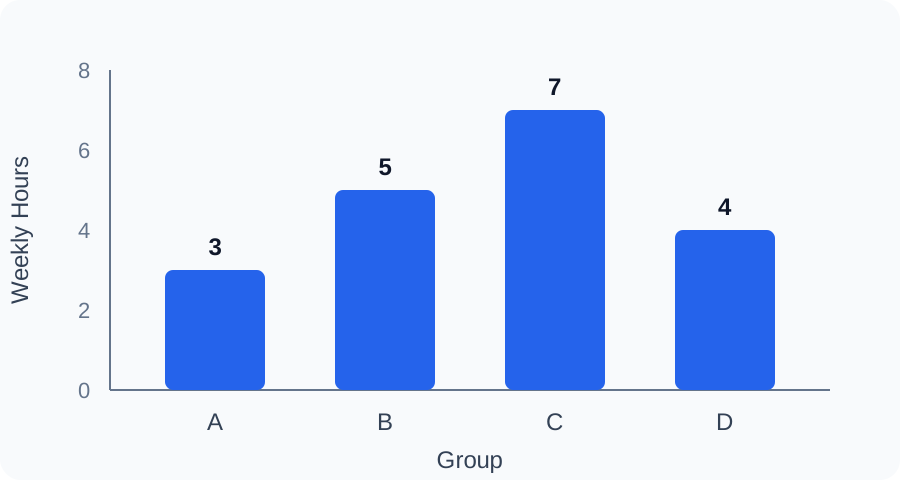
Note. Bars represent the average number of hours reported by students in four fictional groups.
The number and title appear before the image. The note follows the image and explains what the data represent. Because this figure was created for the example, it does not need a copyright attribution.
How to format the image and its notes
Within the image, use a simple sans serif font at approximately 8 to 14 points. Labels, axes, units, and symbols should be readable without enlarging the page. Avoid gridlines and three-dimensional effects when they are merely decorative because they can make the data harder to compare.
If a legend is needed to explain lines, symbols, or patterns, place it within or below the image when possible. Do not add a legend when the figure is already clear without one.
Figures may have general, specific, and probability notes. When more than one type is needed, present them in that order. A general note can explain abbreviations, units, error bars, panels, or the source of a reproduced or adapted figure. If the figure contains error bars, state what they represent, such as standard deviations or confidence intervals.
Where to place a figure
You may embed each figure after the paragraph where it is first mentioned or place all figures on separate pages after the reference list. Either option is acceptable for student papers when the instructor has not specified a location.
When embedding a figure, place it after a complete paragraph and leave a double-spaced blank line before and after it. Align it with the left margin and, when possible, keep the entire figure on one page.
If a long paper contains several figures, the institution may require a list of figures with the number, title, and page of each one. This navigation list does not replace the complete figures.
Original, adapted, and reproduced figures
If you created the figure from your own data, APA Style does not require a Source: Created by the author note. Add wording like this only when your institution requests it.
If you copied a figure or changed an existing one, provide the appropriate copyright attribution in the note and add the work to the reference list. You may also need permission from the copyright holder. An ordinary citation does not always give permission to reproduce a complete image.
Legibility and accessibility
- Use letters and numbers that can be read without enlarging the page.
- Label graph axes and units.
- Explain abbreviations that are not self-evident.
- Do not use color as the only way to distinguish data. Combine it with labels, patterns, or line styles.
- Maintain sufficient contrast between the background, text, and graphical elements.
- Describe the figure's main information in the paper's text.
- If an identifiable person appears in your own photograph, confirm that you have permission to use it.
Figure checklist
- The figure communicates necessary information rather than decorating the page.
- It has a bold number and an italic title above the image.
- The text refers to it by number.
- Labels, axes, symbols, and colors are easy to understand.
- It has no gridlines or three-dimensional effects without an informative purpose.
- Error bars, panels, and symbols are explained when they appear.
- The note contains only necessary explanations.
- Material from another work has attribution, a reference, and permission when required.

Find APA issues before you submit
Upload your Word paper and get a report with the points you need to review.
Check my paper